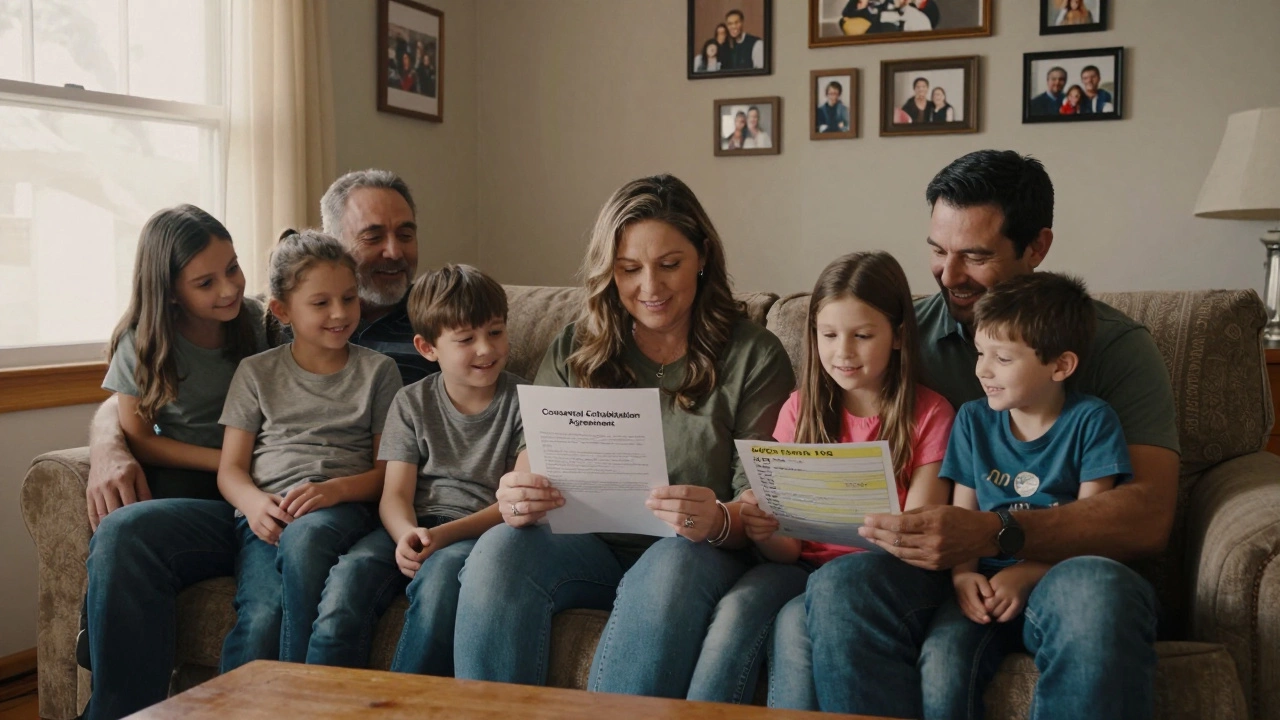
A federal district court in Utah recently ruled that state laws banning polygamy violate the constitutional right to religious freedom and personal autonomy. The decision, issued on November 18, 2025, marks a seismic shift in how American courts view non-monogamous relationships. For decades, polygamy was treated as a criminal act under both state and federal statutes, often lumped together with fraud or coercion in legal discourse. But this ruling separates religious practice from abuse, recognizing that consensual plural marriage - even when it involves multiple spouses - is not inherently illegal. The case was brought by a group of families who had lived openly in polygamous arrangements for over 20 years, raising children, sharing finances, and participating fully in their communities. They were never accused of abuse, trafficking, or underage marriage. Their only crime, according to the court, was loving in a way that didn’t match the legal definition of marriage in their state.
Some people still associate polygamy with extreme religious sects or exploitation, but the reality for many families is far more ordinary. They pay taxes, send kids to public school, and vote in local elections. One of the plaintiffs, a mother of six, said in court documents: "We didn’t ask for special treatment. We just asked not to be treated like criminals for how we love." That sentiment echoes in homes across Utah, Arizona, and Nevada, where an estimated 30,000 to 50,000 people live in plural marriages, most without government recognition or legal protections. The ruling doesn’t legalize same-sex polygamy or force states to issue multiple marriage licenses. It simply says the state can’t criminalize the act of cohabiting with multiple consenting adults. It’s a narrow but powerful win for personal liberty.
What This Ruling Actually Changes
The decision doesn’t mean you can walk into a courthouse tomorrow and get a license for three spouses. But it does mean that police can no longer arrest someone solely for living with multiple partners if all are adults and consent is clear. Prosecutors can still pursue charges if there’s fraud, coercion, child marriage, or financial abuse - those remain illegal. What’s gone is the blanket ban on plural cohabitation. This opens the door for families to seek legal recognition in areas like inheritance, child custody, and healthcare decision-making. Right now, only one spouse is legally recognized. If the primary partner dies, the others have no automatic rights - no access to insurance, no claim to the home, no say in medical care. That’s a legal nightmare waiting to happen.
Some states are already preparing for change. Colorado and New Mexico have begun reviewing their laws. In Utah, legislators are drafting bills that would create a new legal category called "consensual cohabitation agreements," allowing polyamorous families to register their relationships and gain limited rights. It’s not marriage, but it’s a step toward dignity. The federal ruling doesn’t override state laws outright - it just says those laws can’t be enforced if they punish consensual adult relationships without evidence of harm.
Historical Context: From Criminal to Civil
Polygamy was outlawed in the U.S. in the 1880s, primarily to target the Church of Jesus Christ of Latter-day Saints. The Morrill Anti-Bigamy Act and later the Edmunds Act made polygamy a felony, punishable by prison and loss of voting rights. For over a century, the legal system treated plural marriage as a moral failing, not a legal one. Even when the Supreme Court upheld these bans in 1878 (Reynolds v. United States), it did so under the argument that religious belief couldn’t excuse criminal conduct. But that logic began to unravel after Obergefell v. Hodges in 2015, which recognized same-sex marriage as a fundamental right. Courts started asking: If the state can’t ban who you marry, why can it ban how many you live with - if no one is harmed?
The shift isn’t just legal. It’s cultural. Younger generations are more open to diverse relationship structures. A 2024 Pew Research survey found that 31% of Americans under 30 believe non-monogamous relationships are morally acceptable - up from 14% in 2010. Polyamory, open relationships, and triads are no longer fringe concepts. They’re discussed in therapy offices, college classrooms, and even on mainstream podcasts. The law is finally catching up.
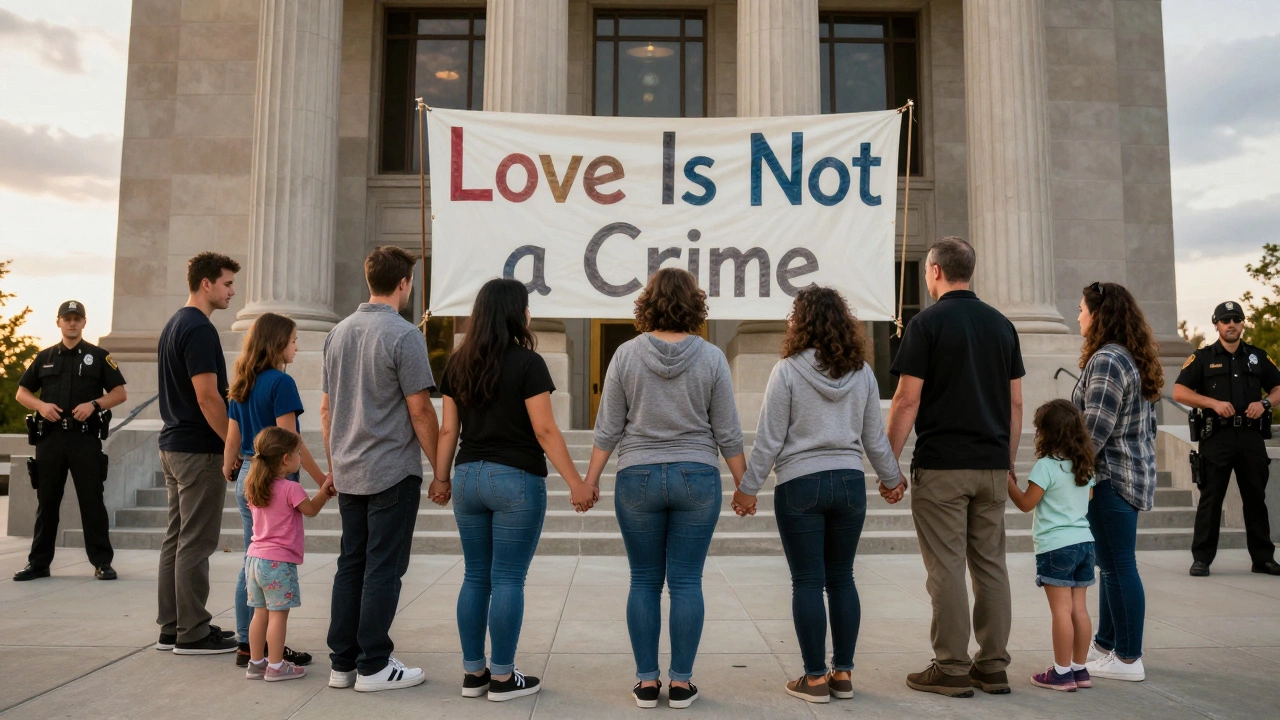
How This Affects Real Families
For the Henderson family in Provo, Utah, the ruling means they can finally apply for joint housing assistance. They’ve been turned down twice because only one spouse could be listed on the application. For the Martins in Salt Lake City, it means the mother of three can now be listed as a legal guardian on her daughter’s school forms - something she’s never been allowed to do, even though she’s raised the child since birth. These aren’t abstract rights. They’re daily struggles.
One father, who asked to remain anonymous, said: "I’ve had to lie on my kid’s pediatric forms for 15 years. Who do I list as the other parent? I can’t say my wife. I can’t say my other wife. So I say ‘father’ and leave it blank. That’s not parenting. That’s hiding." His story is not unique. Thousands of children in plural families grow up with legal invisibility. Their mothers aren’t recognized. Their fathers can’t sign school permission slips. They’re caught in a system that refuses to see them as whole.
What Comes Next
The state of Utah plans to appeal. The attorney general has already called the ruling "a dangerous erosion of marriage norms." But legal experts say the appeal has a low chance of success. Federal courts have been moving toward broader interpretations of personal liberty, especially after Dobbs v. Jackson, which reaffirmed that the Constitution protects intimate decisions. If the Supreme Court takes the case, it could redefine marriage in America - not by expanding it to include multiple partners, but by removing the state’s power to define it at all.
Meanwhile, some couples are already testing boundaries. In Nevada, a group of three partners filed a petition with the county clerk to be recognized as a household unit for property tax purposes. They were denied - but they’re preparing a lawsuit. In Arizona, a polyamorous couple successfully petitioned to have all three names on a child’s birth certificate, citing the new ruling as precedent. These aren’t protests. They’re quiet, persistent acts of claiming space in a system that ignored them.
And while this legal shift is happening, the demand for discreet, high-end companionship services in major cities continues to grow. In London, for instance, the best london escort agency reports a 40% increase in clients seeking long-term, non-traditional relationships - not for sex, but for emotional connection and companionship outside the bounds of conventional marriage. The lines between relationship structures are blurring, and the law is struggling to keep up.

Common Misconceptions
Let’s clear up a few myths. First, this ruling isn’t about polygamy as practiced by extremist groups. Those cases still involve coercion, underage marriage, and isolation - all of which remain illegal. The court was clear: this applies only to consensual adult relationships. Second, this doesn’t mean everyone can have five spouses tomorrow. No state is required to issue multiple marriage licenses. Third, this isn’t a victory for religious groups alone. Many of the plaintiffs are secular, identifying as polyamorous, not religious.
What it is, is a recognition that love doesn’t come in one size. Families aren’t defined by paperwork. They’re defined by care, commitment, and mutual respect. The law finally saw that.
What You Can Do
If you’re part of a plural family, consult a lawyer who specializes in family law and non-traditional relationships. Document everything - shared finances, parenting roles, cohabitation agreements. Start building a paper trail. If you’re not, consider supporting organizations like the Polyamory Legal Advocacy Coalition or the Family Diversity Project. These groups are working to expand legal protections for all relationship structures.
The world is changing. The law is slow. But it’s moving. And for the first time in over 140 years, plural families have a legal foothold. Not full equality. Not yet. But a beginning.
Is polygamy now legal in the United States?
No, polygamy is not fully legal. The recent ruling only struck down laws that criminalize consensual cohabitation with multiple adults. It does not require states to issue marriage licenses to more than two people. Criminal charges still apply if there’s fraud, coercion, underage marriage, or abuse.
Can polyamorous families get legal rights now?
Not automatically, but the ruling opens the door. Families can now challenge denials of housing, healthcare access, and custody rights in court. Some states are drafting new laws to create "consensual cohabitation agreements," which would give limited legal recognition to multi-partner households.
Does this ruling affect same-sex relationships?
Not directly. Same-sex marriage was already protected under Obergefell v. Hodges. This ruling is about the number of partners, not their gender. But it reinforces the broader legal principle that intimate relationship choices are protected under the Constitution.
What happens if a state appeals this decision?
If the appeal reaches the Supreme Court, it could either uphold the ruling - which would set a national precedent - or overturn it, reinstating state bans. Legal experts believe the Court is likely to uphold it, given recent trends toward personal liberty and the lack of harm in consensual adult relationships.
Are there any risks for polyamorous families after this ruling?
Yes. While criminal prosecution for cohabitation is no longer possible, discrimination in housing, employment, and child services may still occur. Families should document their relationships and consult legal advocates. Some landlords and employers may still refuse to recognize plural households, even if it’s no longer illegal.
For those seeking companionship outside traditional norms, the cultural shift is undeniable. In cities like London, where social norms are evolving rapidly, the demand for discreet, respectful connections has never been higher. Whether it’s a vip escort london service offering emotional support or a london vip escort who becomes a trusted confidant, people are redefining what connection means - and the law is finally starting to listen.